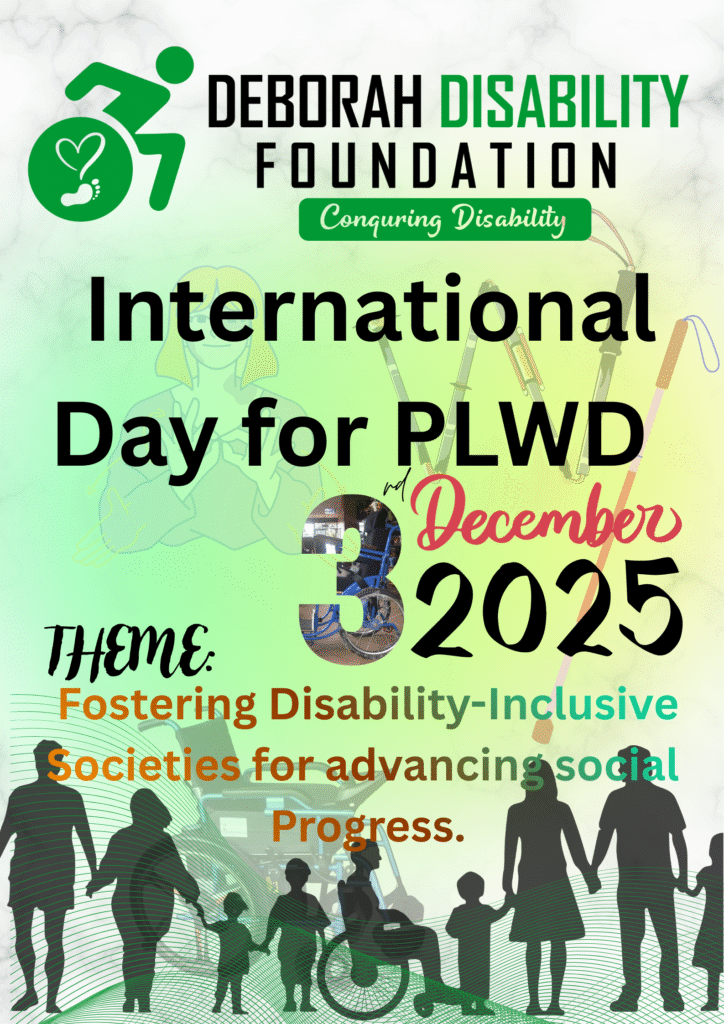
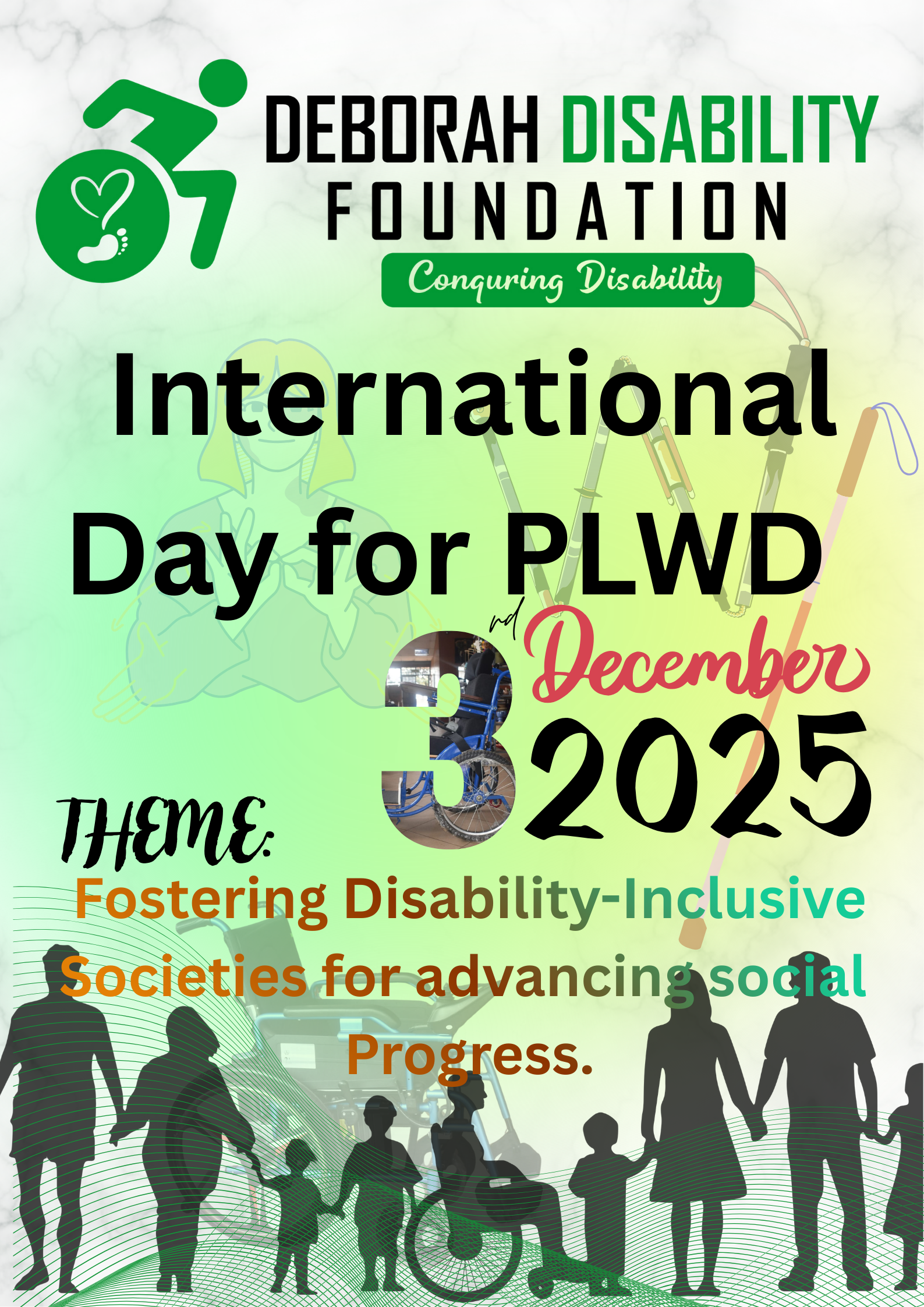
Fostering Disability-Inclusive Societies for Advancing Social Progress
The International Day for Persons with Disabilities is more than a date on the calendar. It is a mirror held up to the world, asking us to confront who we are, what we value, and how we treat one another. The 2025 theme, “Fostering disability-inclusive societies for advancing social progress,” pushes us to look beyond surface-level commitments and examine the deeper structures that shape people’s lives.
A truly inclusive society is not built by chance. It is built by intention. It begins with the understanding that persons with disabilities are not a separate group to be accommodated, but an integral part of the human family whose rights, dignity, and potential are equal to all others. When we talk about inclusion, we are not talking about charity. We are talking about justice.
For many persons with disabilities, daily life is shaped by barriers that others never have to think about. A staircase that blocks entry. A classroom where learning materials are inaccessible. A health center without sign language interpreters. A workplace that overlooks talent because it does not fit a narrow idea of ability. These are not small inconveniences. They are quiet reminders that society was not designed with everyone in mind.
But inclusion asks us to redesign that society—its attitudes, its systems, its priorities.
A disability-inclusive society listens before it acts. It recognizes that persons with disabilities are experts in their own lived experience. Their voices must guide policies, programs, and innovations. Their leadership should not be the exception, but the norm. When decisions are made with them, not for them, we move closer to the fairness that genuine progress demands.
Inclusion also requires that we honor the emotional and physical labor carried by caregivers. They are the invisible bridge between persons with disabilities and the systems meant to support them. Their resilience, patience, and commitment sustain families, schools, hospitals, and homes. For society to progress, caregivers must be empowered—through training, mental health support, fair policies, and recognition of their role as essential contributors to community wellbeing.
This year’s theme invites us to confront an uncomfortable truth: social progress is impossible when people are excluded. A nation cannot grow when a portion of its citizens are pushed to the margins. A community cannot thrive when access depends on ability. And humanity cannot evolve when dignity is conditional.
Yet when inclusion becomes a central value, the ripple effects are profound. Children grow up aware that diversity is normal. Workplaces gain talent that was previously overlooked. Communities become compassionate rather than judgmental. Innovation expands to serve everyone, not just a few. And society begins to measure progress not by numbers alone, but by how gently and respectfully it holds each of its members.
As we mark this day, we are reminded that inclusion is not a gift—it is a responsibility. It asks us to rethink the way we build our schools, treat our neighbors, write our policies, and design our future. It asks us to choose empathy over convenience, and justice over tradition.
A disability-inclusive society is a society that refuses to leave anyone behind. And in choosing that path, we build a world that is not only accessible, but deeply human—one where every person can live fully, dream confidently, and belong without question.